How to Start Selling on Online Marketplaces the Right Way
By Ruby PhamDigital Marketing & Growth Strategy Lead, Pixel Commerce Studio
October 9, 2026
Learn how to start selling on Amazon, Etsy, TikTok Shop, Walmart, and eBay. Explore business setup, seller requirements, fulfillment, pricing, and profit planning.

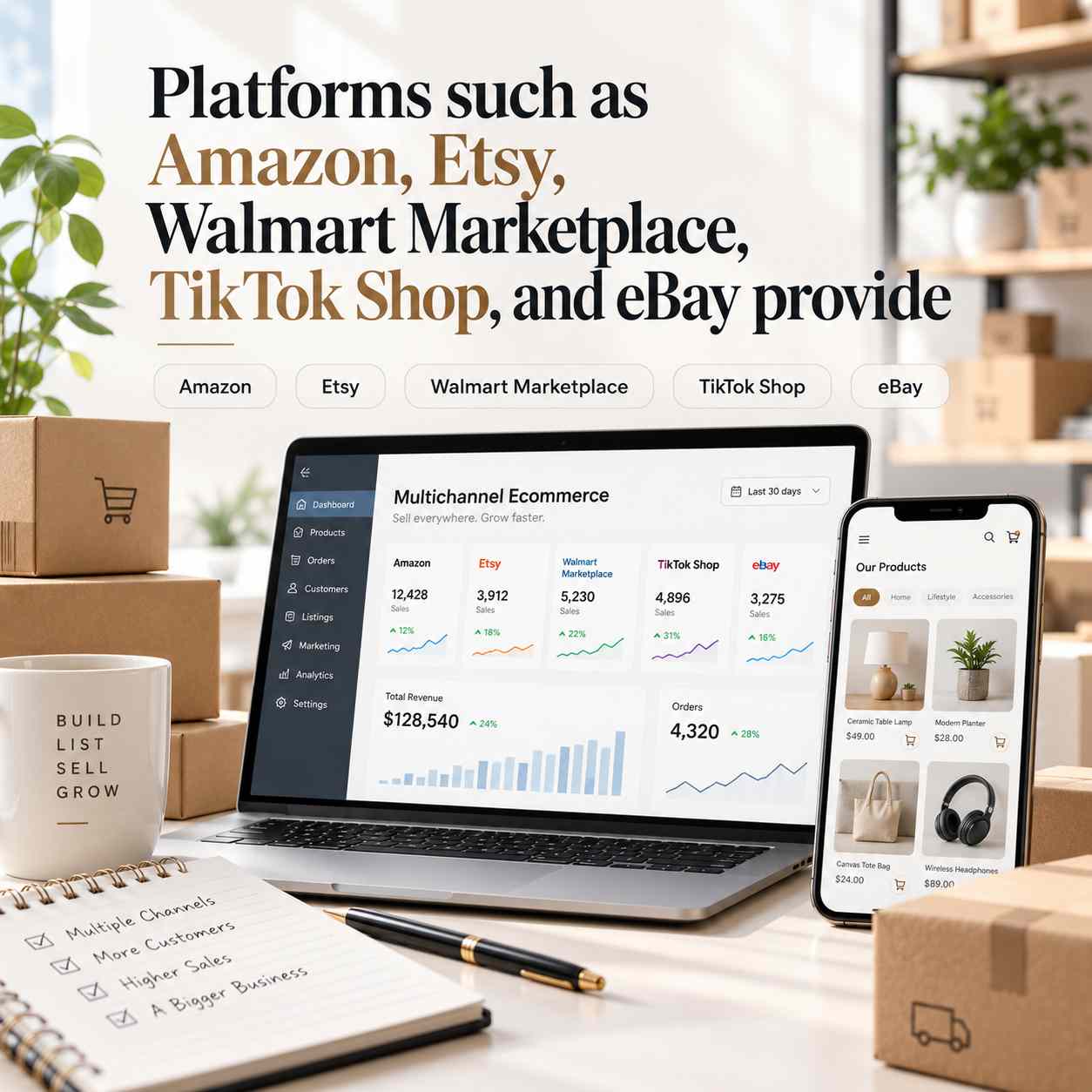
How to start selling on online marketplaces is one of the most important questions for entrepreneurs entering eCommerce. Platforms such as Amazon, Etsy, Walmart Marketplace, TikTok Shop, and eBay provide access to established shopping audiences. However, opening a seller account is only the beginning of building a sustainable online business.
Before launching, business owners need to understand marketplace requirements, business registration, product costs, fulfillment options, and profitability. Without proper preparation, even promising products can face operational challenges, unexpected expenses, and limited growth opportunities.
Moreover, each marketplace operates differently. Therefore, a successful launch requires more than uploading products and waiting for orders.
At Pixel Commerce Studio, we believe marketplace success begins with connecting business setup, product listings, logistics, and fulfillment into one practical strategy.
This guide explains five essential steps to help you prepare your marketplace business before making your first sale.
_20261009_064813.jpg)
1. Choose the Right Business Structure Before Selling Online
One of the first decisions entrepreneurs face is whether to operate as an individual seller or establish a formal business entity.
However, your legal business structure and marketplace seller account type are not necessarily the same decision.
For example, a seller may operate as a sole proprietor, while another may establish a Limited Liability Company (LLC). Additionally, some marketplaces offer different selling plans or account classifications based on their own policies.
Should You Start Selling as an Individual or an LLC?
A sole proprietorship may offer a simpler starting point for an individual entrepreneur. However, the owner generally does not receive the liability separation associated with an LLC.
An LLC, on the other hand, can provide a legal structure that separates certain business obligations from personal assets. Nevertheless, liability protection is not absolute, and establishing an LLC involves registration, compliance, and potential ongoing expenses.
Before choosing your structure, consider several important factors:
Business ownership: Will you operate independently or with partners?
Liability exposure: What risks could arise from your products or business activities?
Tax responsibilities: How will your business report income and manage tax obligations?
Long-term growth: Do you plan to expand into additional marketplaces or product categories?
Operating expenses: What registration, licensing, insurance, and maintenance costs may apply?
Most importantly, consult a qualified attorney or tax professional to evaluate your specific situation.
Why Business Structure Matters for Marketplace Growth
Your business structure can influence financial management, contractual relationships, and future expansion.
Furthermore, establishing organized business records early can simplify banking, bookkeeping, and marketplace verification.
Therefore, business owners should approach legal setup as part of their broader eCommerce strategy rather than simply another registration task.
2. Prepare Your Marketplace Seller Registration Requirements
After determining your business structure, the next step is preparing the information required to register as a seller.
Although major marketplaces share some common verification requirements, each platform has its own eligibility rules, documentation standards, and approval processes.
Consequently, preparing accurate information before applying can help reduce avoidable delays.
Common Documents Needed to Start Selling Online
Depending on the marketplace, seller type, and jurisdiction, you may need:
Government-issued identification
Legal business name and address
Business registration documents, where applicable
Tax identification or taxpayer information
Bank account details
Payment or billing information
Contact information
Product or brand documentation for certain categories
In addition, some marketplaces require identity verification, beneficial ownership information, or additional documents before activating seller privileges.
Amazon, Etsy, Walmart, TikTok Shop, and eBay Requirements
Marketplace | Important considerations |
|---|---|
Amazon | Seller identity verification, account plan selection, tax information, banking, product restrictions |
Etsy | Product eligibility under Etsy's creativity standards, identity verification, shop and payment setup |
Walmart Marketplace | Seller eligibility, business verification, fulfillment capabilities, marketplace approval |
TikTok Shop | Seller eligibility, identity or business verification, product compliance, shipping requirements |
eBay | Seller verification, payment setup, selling limits, category-specific policies |
Because platform policies change, always confirm current requirements through official seller resources before applying.
Keep Your Business Information Consistent
One frequently overlooked issue is inconsistent business information.
For example, differences between your legal business name, registration documents, tax records, and banking information may complicate verification.
Therefore, review your documentation carefully before submitting applications.
Additionally, keep digital copies of relevant records in a secure, organized location. This makes future updates and verification requests easier to manage.
3. Calculate Import Costs Before Choosing Your Product Price
If you plan to source products internationally, understanding your true import costs is essential.
Many new sellers focus primarily on the manufacturer's quoted product price. However, that amount rarely represents the complete cost of bringing inventory into the United States.
Instead, import expenses may include transportation, customs duties, brokerage charges, insurance, and other applicable fees.
What Costs Should You Include When Importing Products?
Your import cost calculation should consider:
Product manufacturing or wholesale cost
International freight charges
Cargo insurance, when applicable
Customs duties and applicable tariffs
Customs brokerage and clearance charges
Domestic transportation
Warehousing and receiving expenses
Furthermore, import duties may depend on the product's tariff classification, country of origin, customs value, and applicable trade measures.
As a result, two products with similar purchase prices may have significantly different landed costs.
Understand Your Product's Landed Cost
Landed cost represents the total expense of getting a product to its intended destination, based on the costs included in your calculation.
For example, consider the following hypothetical shipment:
Expense | Cost |
|---|---|
Product manufacturing (500 units) | $3,000 |
International shipping | $650 |
Customs duties and applicable tariffs | $450 |
Customs brokerage and handling | $150 |
Domestic transportation | $250 |
Total landed cost | $4,500 |
Landed cost per unit | $9.00 |
Although the original manufacturing cost was only $6 per unit, the actual landed cost increases to $9 per unit.
Therefore, setting prices based solely on manufacturing expenses could significantly overstate profitability.
These numbers are illustrative, not current tariff estimates. For accurate import planning, work with a licensed customs broker and confirm the applicable requirements with U.S. Customs and Border Protection.
4. Build an eCommerce Fulfillment Strategy Before Your First Order
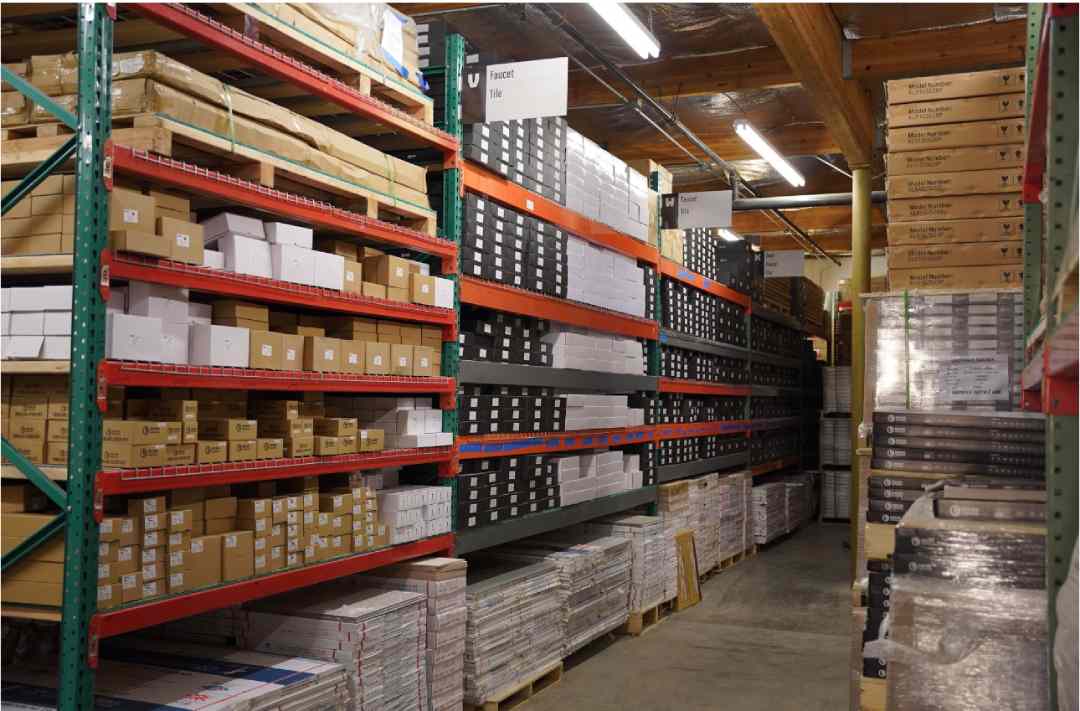
A successful marketplace launch requires more than a product listing. You also need a reliable process for storing inventory, processing orders, shipping products, and handling returns.
Furthermore, fulfillment directly affects operating costs, customer satisfaction, and your ability to scale.
Choosing the right fulfillment model early can help prevent operational problems as order volume increases.
Option 1: Self-Fulfillment
With self-fulfillment, you manage inventory storage, packing, shipping, and returns yourself.
This model may work well for businesses with lower order volumes or products requiring special handling.
However, as sales increase, managing every order manually can become time-consuming.
Option 2: Third-Party Logistics (3PL)
Stay Ahead — Join the Pixel Insider List
Want more strategies on marketing, branding, technology, AI tools, or eCommerce growth?
Subscribe to get:
A third-party logistics provider stores inventory and handles fulfillment on behalf of your business.
Consequently, you can focus more on product development, marketing, and customer acquisition.
Nevertheless, 3PL services introduce additional expenses, including storage, receiving, picking, packing, and shipping charges.
Option 3: Marketplace Fulfillment Services
Some marketplaces provide fulfillment services that allow sellers to use established logistics infrastructure.
For example, Fulfillment by Amazon (FBA) can store eligible inventory and manage order fulfillment through Amazon's network.
However, marketplace fulfillment involves specific fees, eligibility rules, inventory requirements, and operational policies.
Compare Your Fulfillment Options
Fulfillment model | Potential advantage | Important consideration |
|---|---|---|
Self-fulfillment | Greater direct operational control | Requires time, space, and shipping management |
Third-party logistics | Supports outsourced order processing | Additional service fees and provider coordination |
Marketplace fulfillment | Access to established fulfillment infrastructure | Platform-specific costs and requirements |
Ultimately, the right solution depends on product dimensions, order volume, shipping destinations, margins, and customer expectations.
Moreover, businesses selling across multiple marketplaces should evaluate how inventory will be synchronized to reduce overselling and stockouts.
5. Calculate Marketplace Fees and Profit Margins Before Launching
One of the biggest mistakes new marketplace sellers make is confusing revenue with profit.
A product may generate strong sales while delivering disappointing financial results.
Therefore, pricing decisions should account for the complete cost of acquiring, listing, selling, and delivering each product.
Understand Your Marketplace Selling Costs
Depending on your platform and business model, costs may include:
Product acquisition or manufacturing
Import duties and freight
Marketplace referral or transaction fees
Payment processing charges
Fulfillment and shipping
Packaging materials
Advertising and promotional spending
Returns, refunds, and damaged inventory
Storage and other operating expenses
In addition, some marketplaces charge subscription, listing, or category-specific fees.
As a result, sellers should review each platform's official fee schedule rather than assuming that selling costs are identical.
Example: Calculate Profit Per Marketplace Order
Consider a product selling for $35.
Cost component | Amount |
|---|---|
Selling price | $35.00 |
Landed product cost | $9.00 |
Marketplace and payment fees | $5.25 |
Fulfillment and packaging | $5.50 |
Advertising cost per order | $4.00 |
Expected returns allowance | $1.25 |
Estimated contribution profit | $10.00 |
Estimated contribution margin | 28.6% |
In this example, the business retains an estimated $10 per order before fixed overhead, income taxes, and other costs not included in the calculation.
The figures are hypothetical and do not represent any specific marketplace's current fee schedule.
How to Improve Marketplace Profitability
Profitability is not determined by selling price alone.
Instead, businesses should continuously evaluate sourcing costs, fulfillment efficiency, advertising performance, and return rates.
For instance, negotiating better supplier terms may improve unit economics. Similarly, optimizing packaging can reduce certain shipping expenses.
Furthermore, improving product listing quality may increase conversion rates and help make advertising spending more efficient.
Most importantly, review contribution margins regularly as marketplace fees, shipping rates, and customer acquisition costs change.
6. Create Product Listings That Support Marketplace Visibility and Sales
Once your operational foundation is established, the next step is preparing your products for marketplace discovery.
However, a listing should do more than describe a product. It should help shoppers understand its value, compare available options, and make informed purchasing decisions.
Essential Elements of an Optimized Product Listing
A strong marketplace product listing typically includes a clear title, accurate product attributes, high-quality images, relevant keywords, and compelling benefit-focused descriptions.
Additionally, sellers should review platform-specific image guidelines, category requirements, and content restrictions.
For example, Amazon listing optimization may require a different approach from Etsy SEO or TikTok Shop product content.

While Amazon shoppers may rely heavily on product searches and comparison features, TikTok Shop customers may also discover products through short-form video and creator-driven content.
Therefore, sellers should adapt their product presentation to each platform rather than copying identical listings everywhere.

Connect Marketplace SEO With Customer Experience
Marketplace search visibility depends on more than keyword placement.
Product relevance, listing quality, availability, pricing, customer experience, and platform-specific performance signals can all influence how products are discovered or purchased.
Consequently, sellers should focus on both search optimization and operational reliability.
A well-optimized listing can attract qualified shoppers. However, consistent fulfillment and accurate product information help turn that visibility into a sustainable business.
7. Develop a Marketplace Launch Checklist
Before activating your first product listing, review your business readiness.
Marketplace launch readiness
- Determine your legal business structure and tax responsibilities
- Confirm marketplace eligibility and seller registration requirements
- Prepare accurate business, identity, tax, and banking information
- Verify product compliance, import classification, and landed costs
- Choose your inventory storage and fulfillment strategy
- Calculate selling fees, advertising costs, and contribution margins
- Prepare compliant, search-optimized product listings
- Establish shipping, returns, and customer service procedures
- Set up inventory tracking and performance reporting
Completing this checklist does not guarantee marketplace approval or sales. Nevertheless, it helps establish a more organized foundation before launch.
Furthermore, it provides a practical framework for identifying gaps in your business setup, product preparation, and operational planning.
8. How Pixel Commerce Studio Helps You Prepare for Marketplace Growth
Starting an online marketplace business involves several interconnected decisions.
Business registration, seller verification, product sourcing, listing optimization, inventory planning, and fulfillment all affect your ability to operate efficiently.
However, managing these activities independently can create unnecessary complexity.
At Pixel Commerce Studio, we help businesses connect the essential components of marketplace preparation into a more coordinated workflow.
Our approach focuses on aligning marketplace setup, product presentation, logistics, and fulfillment planning with your business objectives.
Whether you are preparing to sell on Amazon, Etsy, Walmart Marketplace, TikTok Shop, or eBay, having a clear operational roadmap can make the launch process more manageable.
Most importantly, preparing the right foundation helps your business move beyond simply opening an account toward building a scalable marketplace operation.
Frequently Asked Questions About Starting an Online Marketplace Business
Do I need an LLC to sell on Amazon, Etsy, or TikTok Shop?
Not necessarily. Depending on the marketplace and your circumstances, you may be eligible to sell as an individual or sole proprietor. However, an LLC may be appropriate for certain business ownership, liability, or growth objectives. Consult qualified legal and tax professionals before deciding.
Which online marketplace is best for beginners?
The best marketplace depends on your product category, target audience, business model, and operational capabilities. Etsy may be suitable for eligible creative products, while Amazon, eBay, Walmart Marketplace, and TikTok Shop serve different shopping behaviors and seller requirements.
How much money do I need to start selling online?
Startup costs vary based on inventory investment, product sourcing, registration expenses, marketplace fees, advertising, and fulfillment. Therefore, prepare a realistic startup budget and cash-flow forecast before purchasing inventory.
Can I sell on multiple marketplaces at the same time?
Yes, provided you meet each platform's eligibility and policy requirements. However, selling across multiple channels requires careful inventory coordination, order management, and consistent product information.
What is the difference between FBA and a 3PL?
Fulfillment by Amazon is Amazon's fulfillment service for eligible sellers and products. A third-party logistics provider is an independent fulfillment company that may support one or multiple sales channels. Fees, services, and operational requirements vary.
How do I calculate profit when selling on marketplaces?
Subtract relevant product costs, marketplace fees, fulfillment, advertising, and expected returns from your selling price to estimate contribution profit. Additionally, account for fixed overhead, taxes, and other expenses when evaluating overall business profitability.
What should I do before launching my first marketplace product?
Confirm seller eligibility, business documentation, product compliance, landed costs, fulfillment arrangements, selling fees, pricing, and listing requirements. Moreover, establish a reliable process for tracking orders, inventory, returns, and financial performance.


Like This Blog? Explore More from Pixel Commerce Studio
Dive into more insights across our most popular categories: